 Skip-the-line available
 The Best Time to Visit the Alcázar de Segovia
Month-by-month crowds and weather, the day-tripper rhythm from Madrid, and the hours when the castle and its tower are at their best.
The Alcázar de Segovia rewards good timing twice over: once inside, where the state rooms feel entirely different empty than full, and once outside, where the castle's famous prow profile changes character with every hour of light. Because entry is by timed slot, choosing well costs nothing — you simply book the right slot instead of the wrong one. This guide breaks down the seasons, the weekly rhythm of Madrid day-trippers, and the hours that give you the tower terrace and the valley viewpoints at their finest.
Season by Season
May, June and September are the sweet spot: warm, clear days on the meseta, long evenings, and crowds a clear step below high summer. July and August bring the heaviest visitor numbers and strong sun — the tower terrace is exposed, so early slots are kinder — but also the longest light for the valley viewpoints after your visit. Spring is the valley at its greenest, with the poplars along the Eresma in fresh leaf below the castle's crag, and the sierra often still snow-capped behind the city: the full fairy-tale composition.
Autumn and winter are the connoisseur's seasons. October paints the river valleys gold, and from November the day-tripper tide thins markedly on weekdays. Winter on the Castilian plateau is genuinely cold, but it repays the coat: mist pooling in the ravines below the prow, occasional snow on the slate spires, and state rooms you can have nearly to yourself. Hours shorten to roughly 10:00–18:00 from November to March against 10:00–19:30 in the warmer months, and a small number of holiday dates close or shorten the day — we confirm current hours with every booking.
The Madrid Day-Tripper Rhythm
Segovia's crowds are made in Madrid. The 30-minute high-speed train and the motorway deliver a wave of day visitors that builds from late morning, peaks from roughly 12:00 to 16:00, and recedes as trains head back for dinner. The castle, at the far end of the old town, feels this wave about an hour after the aqueduct does. The practical conclusion: book the first slots after 10:00, before the wave arrives, or the final 90 minutes before close, after it has gone. Both ends beat the middle comfortably.
Weekends and Spanish public holidays amplify everything, adding domestic visitors to the international flow — Saturday midday in July is the castle at its fullest. Weekdays outside holiday periods are calm by comparison, and a Tuesday-to-Thursday morning in late autumn or winter is as quiet as the Alcázar de Segovia gets. One caveat for Tuesdays: the EU-citizen free window from 14:00 to 16:00 concentrates an extra queue into early afternoon, so if you are visiting on a Tuesday with a standard ticket, the morning slots are the calmer choice.
Light: the Tower and the Valley Viewpoints
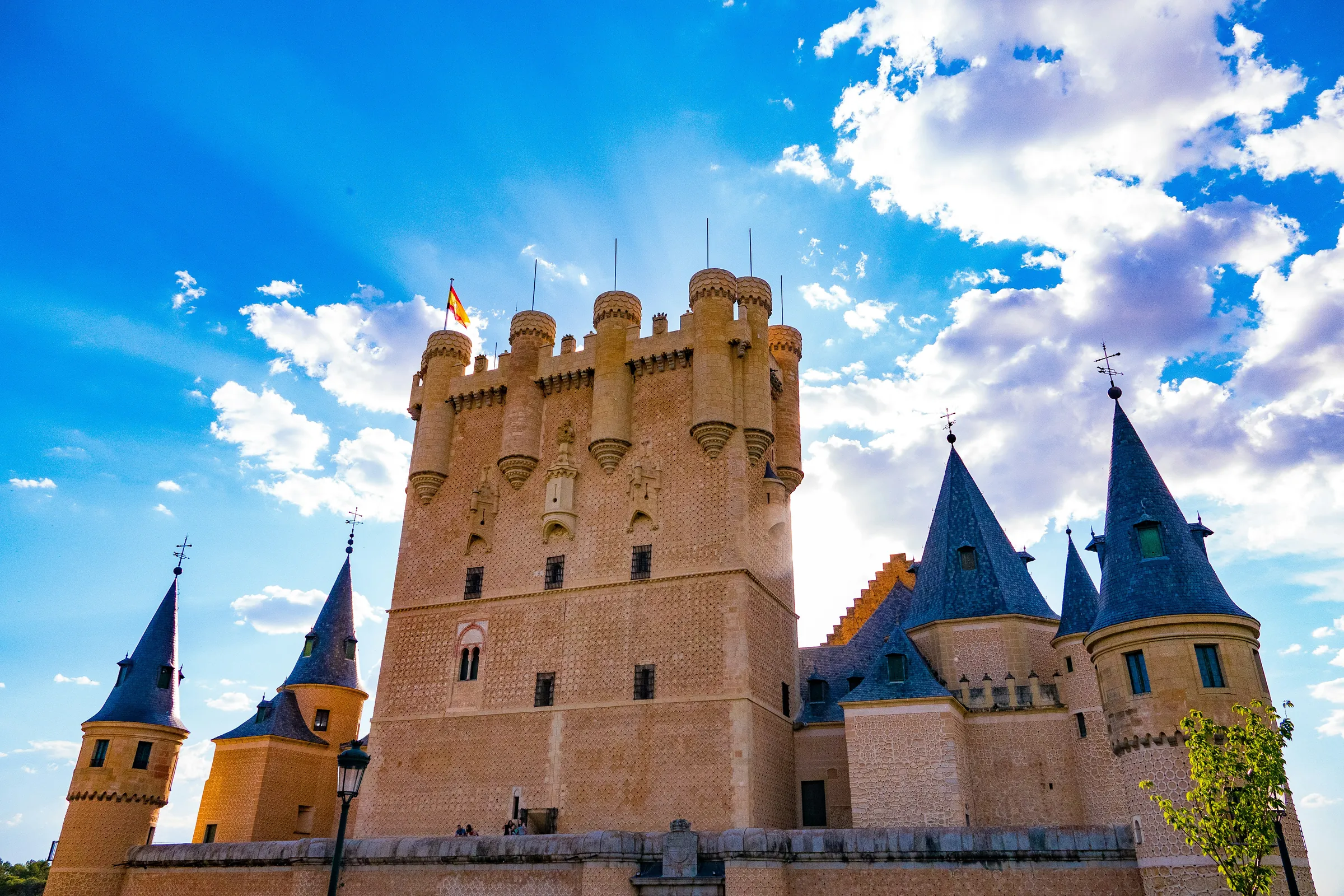
The Tower of Juan II faces its best hour late in the day. From the terrace at the top of the 152 steps, late-afternoon light falls along the old town toward the cathedral and aqueduct, the ravines below fall into shadow, and the plateau horizon sharpens — the last two hours before close are the photographer's slots, and they are also the first complete tickets to sell out in summer. Morning climbs trade the golden light for emptier stairs and cooler air, a worthwhile exchange in July and August.
Outside the walls, the classic image of the castle — the full ship's-prow profile riding above the trees — is taken from the viewpoints across the Eresma valley to the northwest, around the Vera Cruz church and the Pradera de San Marcos. These face the castle's most sculptural side and take warm light in the late afternoon, which argues for a simple plan: castle interior in a morning or early-afternoon slot, then the 45-minute viewpoint loop as the light turns. In winter, the low sun keeps the profile modelled for most of the day, and mist in the valley can hand you the best photograph of your trip before breakfast.
Building the Perfect Segovia Day
The castle anchors one of Spain's great day trips, and the timed slot is the peg to hang it on. The proven pattern from Madrid: an early train to Segovia-Guiomar, bus or taxi to the aqueduct, coffee beneath the arches before the crowds, then the 20–25 minute walk up through the Calle Real, the Plaza Mayor and the cathedral to reach the castle for a late-morning slot. Lunch afterwards in the old town — Segovia's cochinillo, roast suckling pig, is the city's signature — then the valley viewpoint loop in the afternoon light before the train home.
If you are staying overnight, you hold the best cards: the aqueduct and old town in evening light after the day-trippers leave, dinner without a train to catch, and the castle's first slot the next morning with the state rooms nearly empty. Overnighting also lets you take a last-slot tower climb on the first day and the quiet morning palace circuit on the second. However you build the day, book the castle slot first and arrange the rest around it — entry time is the one fixed point, and tower capacity for the best hours goes earliest.
Frequently asked
What is the best month to visit the Alcázar de Segovia?
May, June and September offer the best balance of weather, light and manageable crowds. July and August are busiest and hottest; late autumn and winter weekdays are quietest, with shorter hours and a real chance of mist or snow scenes.
What time of day is best?
The first slots after 10:00 for the emptiest state rooms, or the last 90 minutes before close for the best light from the Tower of Juan II. The midday window of roughly 12:00–16:00 is when Madrid day-trippers peak.
Which days are quietest?
Weekdays outside Spanish holidays, especially in late autumn and winter. Weekends and public holidays are busiest. On Tuesdays, the EU-citizen free window (14:00–16:00) adds an early-afternoon queue, so mornings are calmer.
When should I climb the tower for the best views?
Late afternoon — the last two hours before close give the warmest light over the old town and plateau. Those complete-ticket slots sell out first in summer, so book early. Morning climbs are cooler and quieter.
Is winter worth it?
Yes, if you dress for the cold. Mist in the ravines, possible snow on the spires and near-empty state rooms make winter the most atmospheric season. Hours are shorter (roughly 10:00–18:00) and a few holiday dates close the castle.
Where is the classic photo taken?
From the viewpoints across the Eresma valley northwest of the castle, around the Vera Cruz church and the Pradera de San Marcos. They take their best light in late afternoon; the loop from the castle adds about 45 minutes.
Does the timed ticket limit my flexibility?
It fixes your entry time, not your day's shape — and it guarantees you walk in at that time past the queue. Book the slot that fits the light and crowds you want, and build the rest of your Segovia day around it.